
33% Lower Bills with AI: Smarter Energy Use in the Netherlands
The Hilights:
-
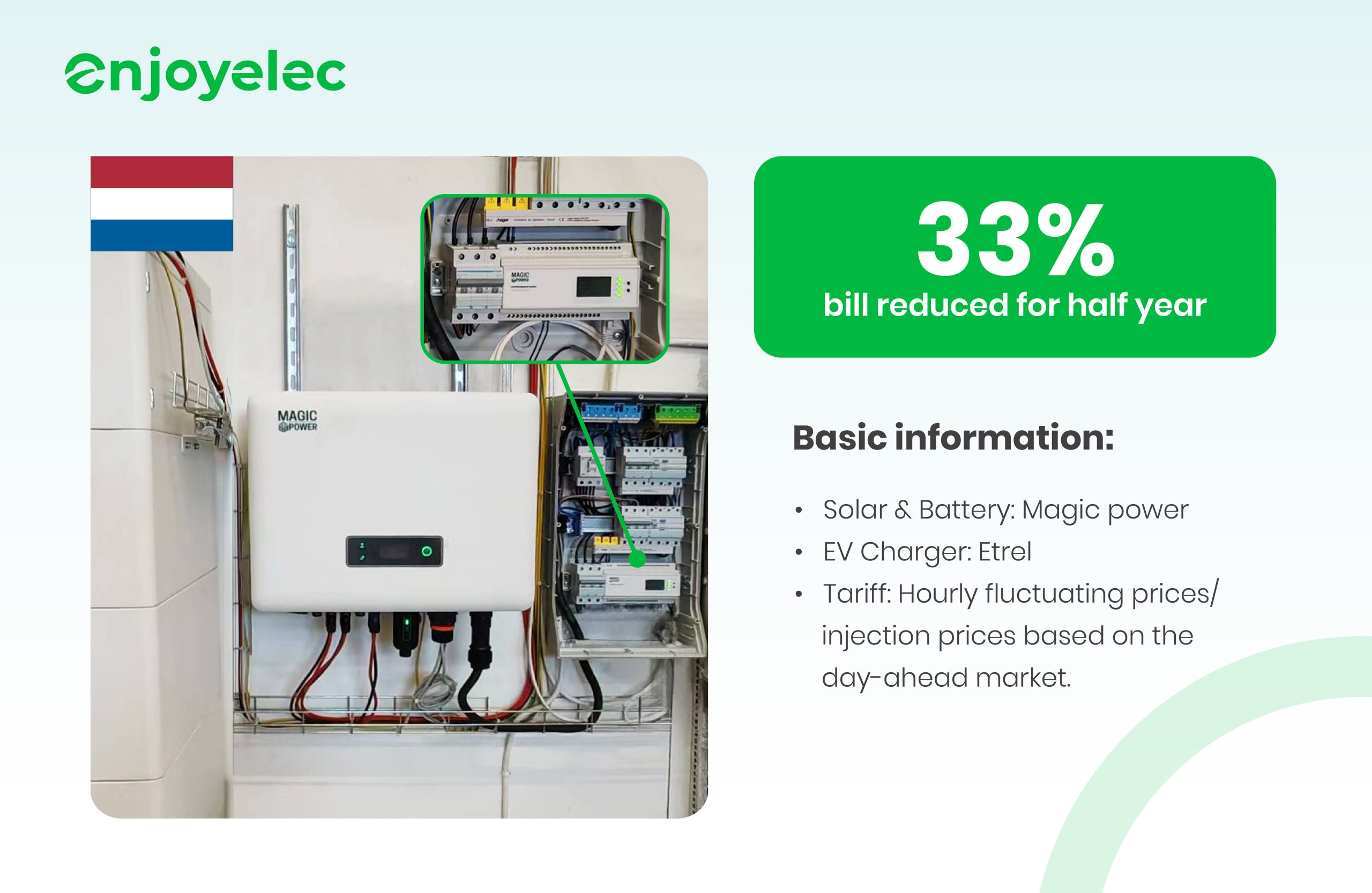
33% Lower Electricity Bills by shifting consumption and exports to the most cost-effective hours
-
Ready for Energy Trading with intelligent scheduling that unlocks new revenue potential
-
Flexible, Market-Responsive Usage that supports grid balance and decarbonization goals
In a Dutch household equipped with a Magic Power battery, an Etrel EV charger, and a white-labeled HEMS Controller Pro developed by enjoyelec, home energy use isn’t just automated—it’s intelligently optimized. Operating under a day-ahead hourly pricing model, where both consumption and injective prices fluctuate every hour, this household turns market complexity into opportunity.
The Challenge: Unlocking Value in a Complex Market
AI Strategy Meets Dynamic Pricing
With enjoyelec’s AI-driven HEMS Controller Pro, this household optimizes its energy use by aligning asset operation with hourly electricity market prices. The system runs continuous next-day price forecasting and applies an AI-based strategy to automatically schedule charging, discharging, and energy export. It charges the battery and electric vehicles during low-price periods, supplies household loads from stored energy when prices peak, and exports surplus solar power at the most profitable hours. This strategic coordination across all assets ensures optimal economic outcomes while supporting smarter, market-responsive energy consumption.
From isolated devices to an intelligent, AI-synced energy ecosystem, this Dutch home shows how smart energy management can turn complexity into opportunity—cutting costs today and enabling smarter participation in tomorrow’s energy markets.
