Feed-In Management: Powering Profits from Renewable Energy
What is Feed-in Management?
A Feed-In Tariff (FiT) is a policy that encourages people to produce their own renewable electricity—like from rooftop solar panels or wind turbines—by paying them a fixed price for the power they send to the grid. This price is often higher than the market rate and guaranteed for many years, making it easier and more attractive for households, businesses, and farmers to invest in clean energy systems. Thanks to FiTs, the number of renewable energy systems has grown rapidly. But as more and more solar and wind power flows into the grid—often at the same time, like sunny afternoons—this can cause stress on the electricity network. That's where Feed-In Management (FIM) comes in. FIM is a control system used by grid operators to limit how much renewable electricity is fed into the grid during times of congestion or instability. When needed, operators can remotely reduce the output of solar or wind systems to keep the grid safe and balanced. In short, while FiTs help accelerate renewable energy adoption, FIM ensures that growth remains stable and manageable for the power system.
How does Feed-in Management work?
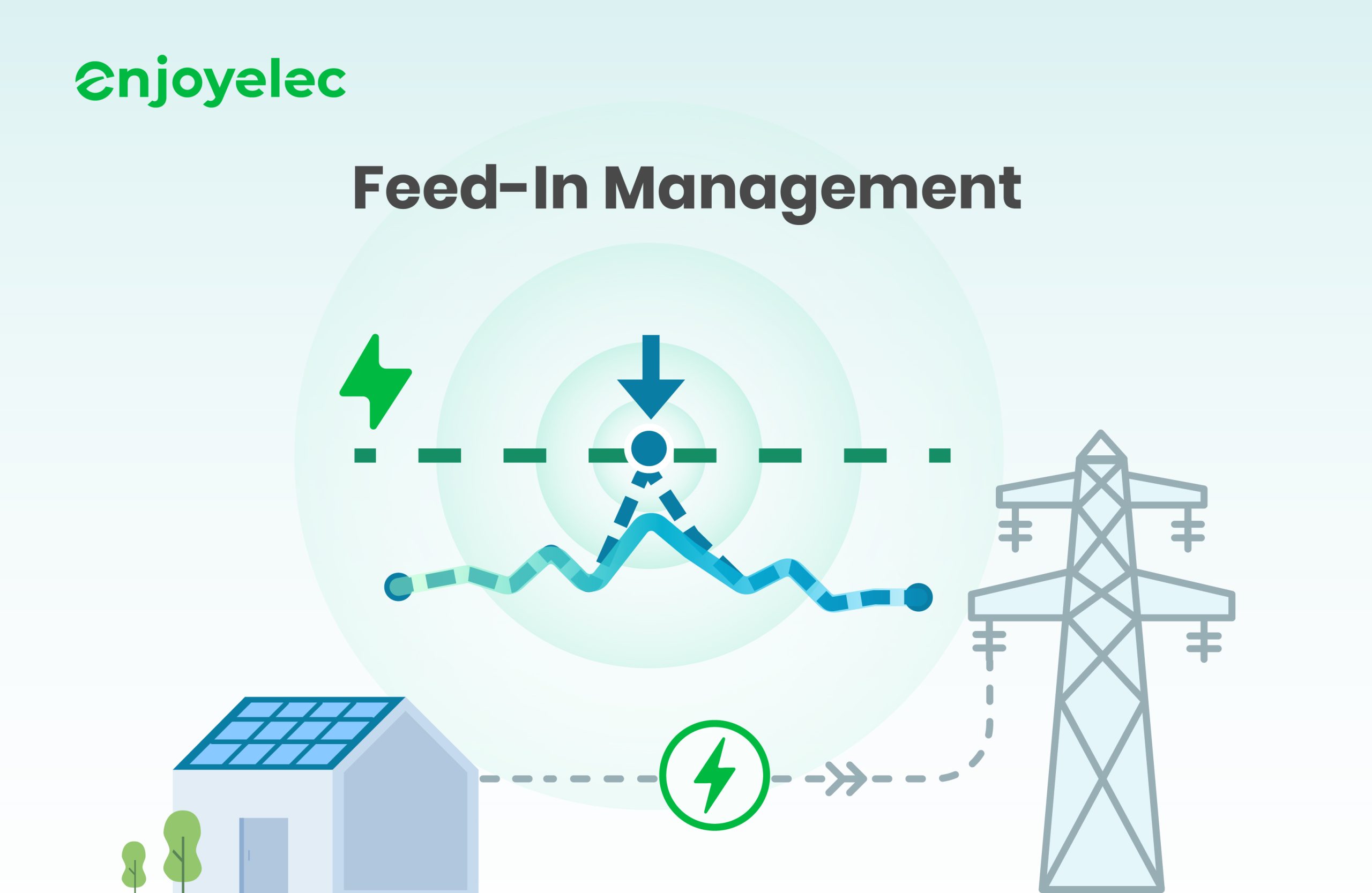
Feed‑in management is the system operators' tool for ensuring renewable energy doesn't destabilize the power grid when supply exceeds local capacity. Here's how it works:
Grid operators (TSOs/DSOs) monitor real-time conditions and send automated signals to solar farms, wind parks, and inverters when a section of the network is congested or risks instability. These commands instruct generators to reduce or completely stop output—for example scaling output to 60%, 30%, or even 0% of capacity.
This active curtailment helps prevent voltage or frequency imbalances and avoids overloading infrastructure. The systems report compliance automatically, ensuring operators know when the grid is stabilized.
Because curtailed producers lose potential income, regulations (like Germany's EEG) require compensation for the lost power—costs that are ultimately recovered through grid charges or tariffs.
What are the benefits of Feed-in Management?
- Enhanced Grid Stability
FIM systems can adjust the feed-in of electricity in real-time, responding to fluctuations in both generation and demand. This dynamic control helps maintain grid frequency and voltage within acceptable limits, reducing the risk of blackouts.
- Reduced Curtailment
FIM helps in predicting and managing periods of low demand or grid congestion, thereby reducing the need to curtail renewable energy production. This ensures that more of the generated renewable energy is utilized, rather than being wasted.
- Support for Decentralized Energy Systems
FIM facilitates the integration of decentralized renewable energy systems, such as rooftop solar panels and community wind turbines, into the grid. This decentralization promotes energy independence and resilience, allowing local communities to contribute to and benefit from renewable energy generation.
Feed-in Management in Europe
Many European countries have already implemented advanced feed-in management systems, with Germany, Austria, and Switzerland leading the way.
In Germany, the Renewable Energy Sources Act (EEG) mandates priority grid access for renewable energy producers and includes legally required curtailment and compensation mechanisms when grid constraints occur. Installations over 100 kW can be remotely adjusted by grid operators to prevent overloads, while operators receive financial reimbursement for any reduced feed-in.
Austria complements its feed-in system under the Green Electricity Act with widespread smart-meter rollouts, dynamic quotas for renewables, and pilot smart-grid regions that integrate decentralized generation and small hydro. These initiatives improve responsiveness to grid conditions and enable better load balancing.
In Switzerland, the cost-covering feed-in remuneration (KEV) guarantees market-based compensation for renewables—including solar, wind, biomass, and small hydro—over long-term periods (20–25 years). Subsidies are refinanced via consumer surcharges and adjusted over time to control capacity and costs.
How enjoyelec HEMS maximize FIT benefits
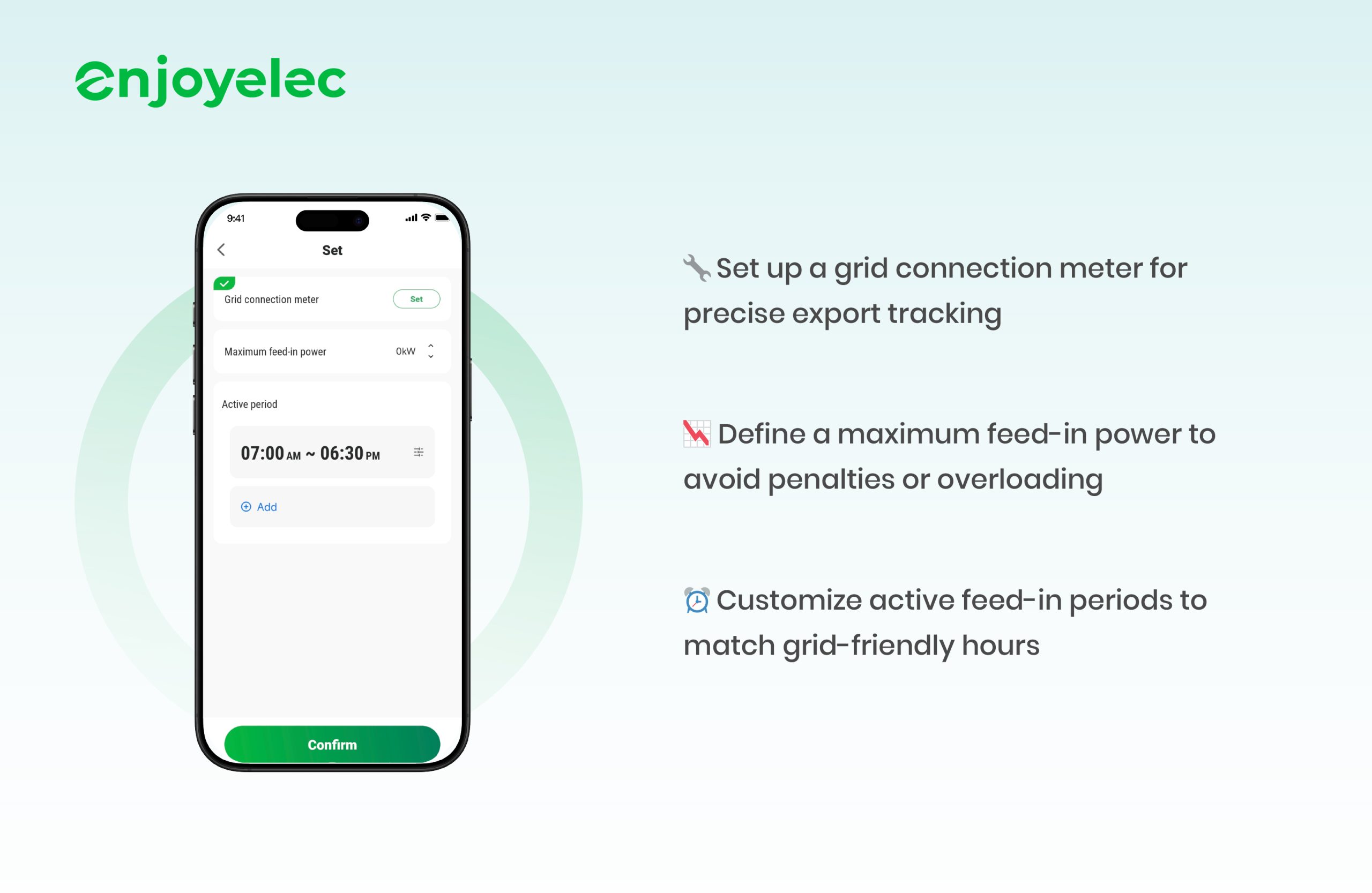
Feeding solar energy back to the grid might seem like a straightforward way to reduce electricity bills and earn income—but without intelligent control, it can create unintended issues. Uncoordinated or excessive exports can overload local infrastructure, disrupt grid stability, and even lead to financial penalties under certain regulations.
That's where enjoyelec's Home Energy Management System (HEMS) steps in. Designed to work hand-in-hand with dynamic tariffs and regional grid requirements, our HEMS gives homeowners powerful tools to fine-tune their grid interactions—ensuring smarter energy use, compliance, and financial optimization.
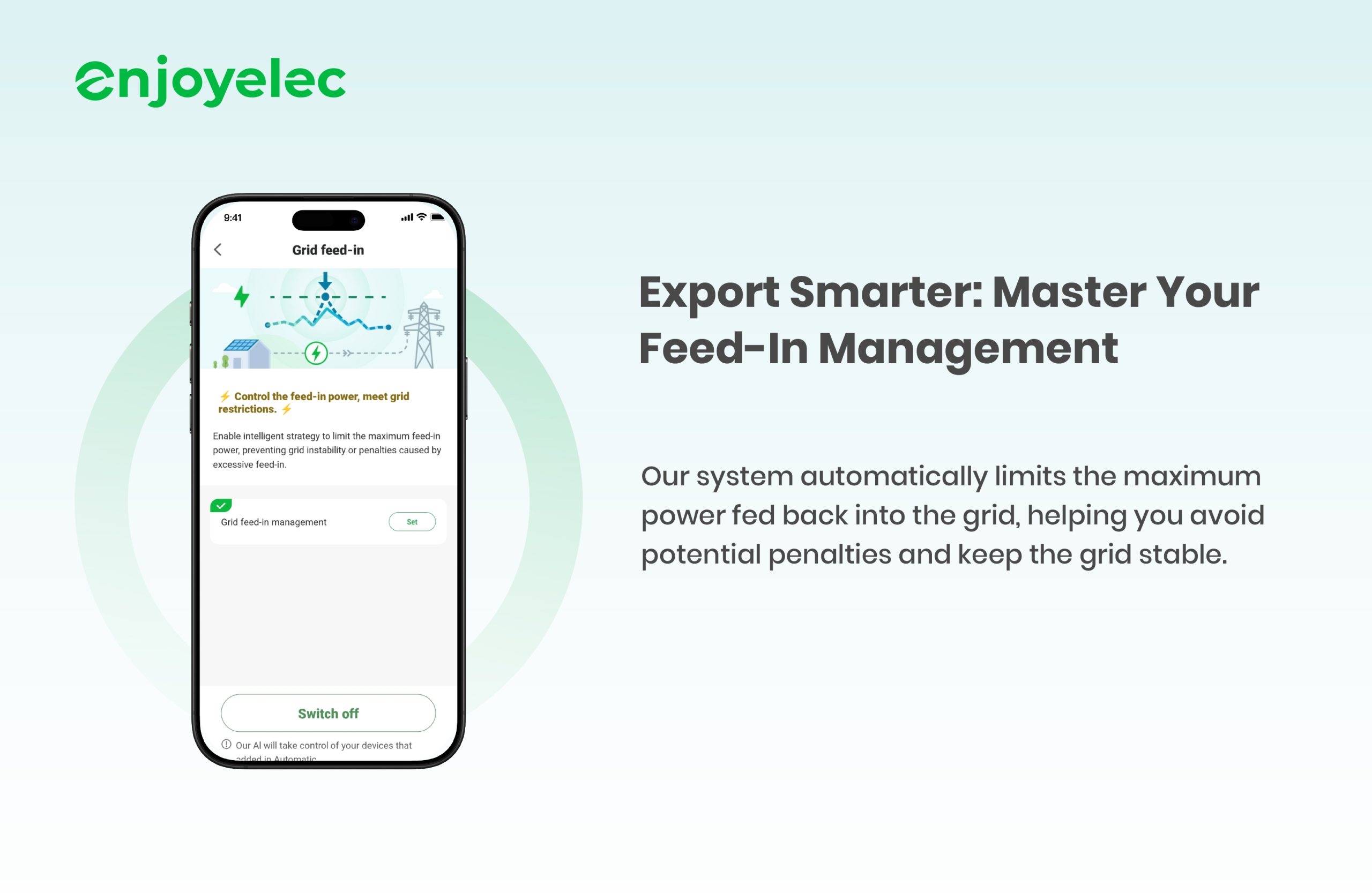
enjoyelec HEMS includes built-in grid feed-in management capabilities that allow for:
- Precise Export Monitoring: By connecting a grid meter, users gain real-time visibility into how much power is being sent back to the grid—down to each kilowatt-hour.
- Custom Feed-In Limits: Homeowners can set a maximum export level, avoiding over-injection that may exceed local grid capacity or trigger penalties.
- Time-Based Feed-In Scheduling: Export energy only when it aligns with grid-friendly hours, or when dynamic tariffs offer favorable rates.
These settings can all be easily configured in the enjoyelec app or portal, giving users both clarity and control.
What's the benefit?
- Comply with regional regulations such as Germany's §14a EnWG, which places constraints on grid injection to ensure stability.
- Avoid overfeeding penalties, which are becoming more common in areas with high solar penetration.
- Support grid reliability by reducing pressure during peak production times.
- Maximize system value by shifting energy toward self-consumption and smart storage—especially when feed-in tariffs are low or declining.
In short, enjoyelec HEMS doesn't just help you participate in the grid—it helps you do it intelligently, sustainably, and profitably.
? Whether you're a homeowner aiming to maximize FIT revenues or an energy pro optimizing exports across dozens of sites, our feed-in management tools put you in the driver's seat. Download our app for more information:
?App Store: https://apps.apple.com/us/app/enjoyelec/id6467418530
?Google Play:https://play.google.com/store/apps/details?id=com.enjoyelec.hems