
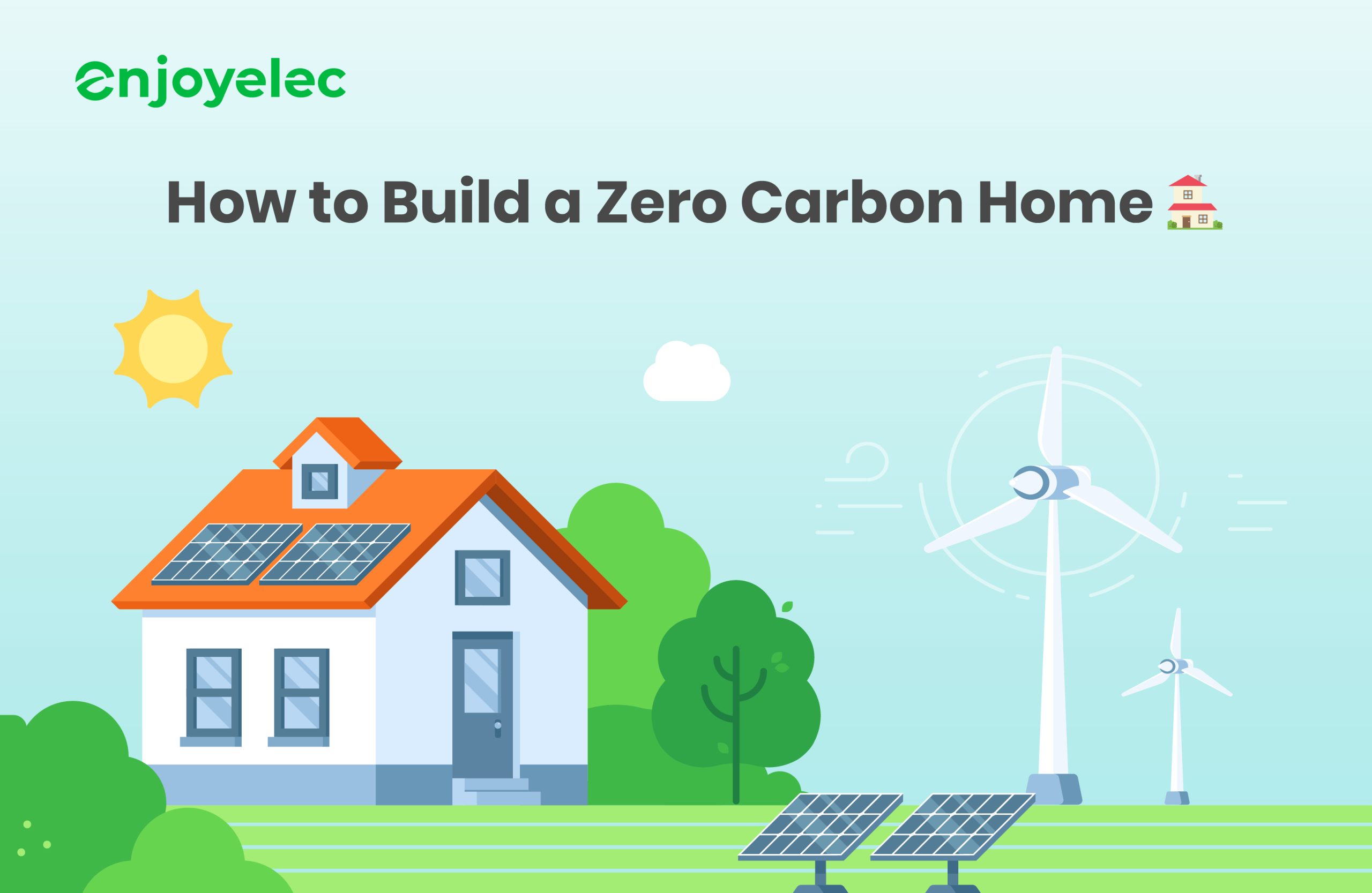
How to Build a Zero Carbon Home
What is a zero carbon house?
A zero carbon house—also called a zero emissions home—is a core component of any eco-friendly house plan. It minimizes environmental impact by considering the type and amount of energy used during construction, as well as the energy sources used to heat, cool, and power the home after it’s built. The goal is to reduce the home’s overall carbon footprint across its entire lifecycle.
The main focus of zero carbon design is energy efficiency and sustainability. These homes rely on renewable energy, feature high levels of insulation and airtightness, and avoid unnecessary energy loss. By optimizing energy use and reducing dependence on fossil fuels, a zero carbon house supports long-term environmental goals while lowering utility bills and improving living comfort.
What Powers a Zero Carbon, All-Electric Home
Rooftop Solar
Solar panels play a crucial role in helping households generate their own renewable electricity. By converting sunlight into usable power, they reduce dependence on fossil fuels and lower electricity-related carbon emissions. A rooftop solar system allows homeowners to become energy producers, increasing self-sufficiency, protecting against volatile grid prices, and even enabling net metering or income generation by selling excess power back to the grid. Solar is foundational to both residential decarbonization and the broader clean energy transition.
Solar Inverter
A solar inverter converts the DC electricity generated by solar panels into AC electricity for home use. It’s the brain of the solar system, often integrated with smart energy management systems to optimize when and how solar energy is used or stored. Advanced inverters can even support grid services and load shifting.
Home Battery Storage
Home batteries store excess solar energy produced during the day for use at night or during peak demand hours. This increases self-consumption, reduces grid reliance, and enhances backup power resilience. Paired with smart systems, batteries enable demand response, optimize cost savings, and extend the benefits of solar power beyond daylight hours.
Electric Vehicles (EVs)
Switching to an electric vehicle eliminates emissions from transportation, a major source of household carbon output. When charged with solar energy or green electricity, EVs can be completely zero-emission. Advanced systems even support vehicle-to-home (V2H) or vehicle-to-grid (V2G) capabilities, turning the EV into a mobile energy asset.
EV Charger
A smart EV charger allows users to schedule charging during off-peak hours or when solar energy is abundant. It enables load management, helps reduce electricity bills, and ensures the EV is charged with low-carbon electricity. Integrated with a HEMS (Home Energy Management System), it forms part of a larger energy optimization strategy.
A smart meter provides real-time data on electricity usage, generation, and pricing. This transparency empowers homeowners to make informed decisions, optimize energy consumption, and participate in dynamic tariff programs. It’s a key enabler for demand-side flexibility and accurate billing.
Heat Pump
A heat pump efficiently provides heating and cooling using electricity, often at 3–4x the efficiency of traditional systems. It’s an essential technology in a fully electrified home, reducing heating-related emissions and integrating smoothly with solar and battery systems. When controlled by smart algorithms, it can pre-heat or pre-cool based on dynamic electricity prices, maximizing comfort and savings.
Why Smart Control Is the Key to Running a Zero Carbon Home Efficiently
While solar panels, batteries, heat pumps, and EVs are the building blocks of a zero carbon home, it’s smart control systems that bring them together into one intelligent, efficient ecosystem. Without coordination, even the most advanced clean technologies can operate sub-optimally—charging at peak prices, wasting solar surplus, or overheating unnecessarily.
This is where a Home Energy Management System (HEMS) makes the difference. Smart control monitors real-time energy flows, forecasts usage patterns, responds to dynamic tariffs, and automatically optimizes how and when devices operate. Whether it’s charging your EV during off-peak hours or pre-heating your home with surplus solar, intelligent energy automation is what makes zero carbon living not just possible—but practical and affordable.
And at the heart of seamless device communication lies EEBUS, the open communication standard that enables interoperability between energy devices—regardless of brand or manufacturer. By supporting EEBUS, HEMS ensures that all components in the home energy system can speak the same language, working together smoothly to deliver maximum efficiency and flexibility.
How the enjoyelec App Turns Your Home into a Zero Carbon Powerhouse
The enjoyelec app is more than just a dashboard—it’s the brain behind your zero carbon lifestyle. It integrates all your home energy devices into one seamless platform, from rooftop PV and batteries to EV chargers and heat pumps. With AI-powered strategy recommendations and real-time control, the app ensures your home consumes less, stores smartly, and feeds back clean energy at the optimal time. You can monitor energy flows, costs, and savings effortlessly—transforming your home into a responsive, self-optimizing energy ecosystem.