
How AI is Revolutionizing Energy Management Truly Intelligent
What is AI in Energy Management?
Artificial Intelligence (AI) in energy management refers to the use of advanced algorithms and machine learning techniques to monitor, predict, and optimize how energy is produced, stored, and consumed. Rather than relying on manual schedules or simple rules, AI systems learn from vast amounts of data—both historical and real‑time—to make smarter decisions automatically.
How AI Impacts Energy Management
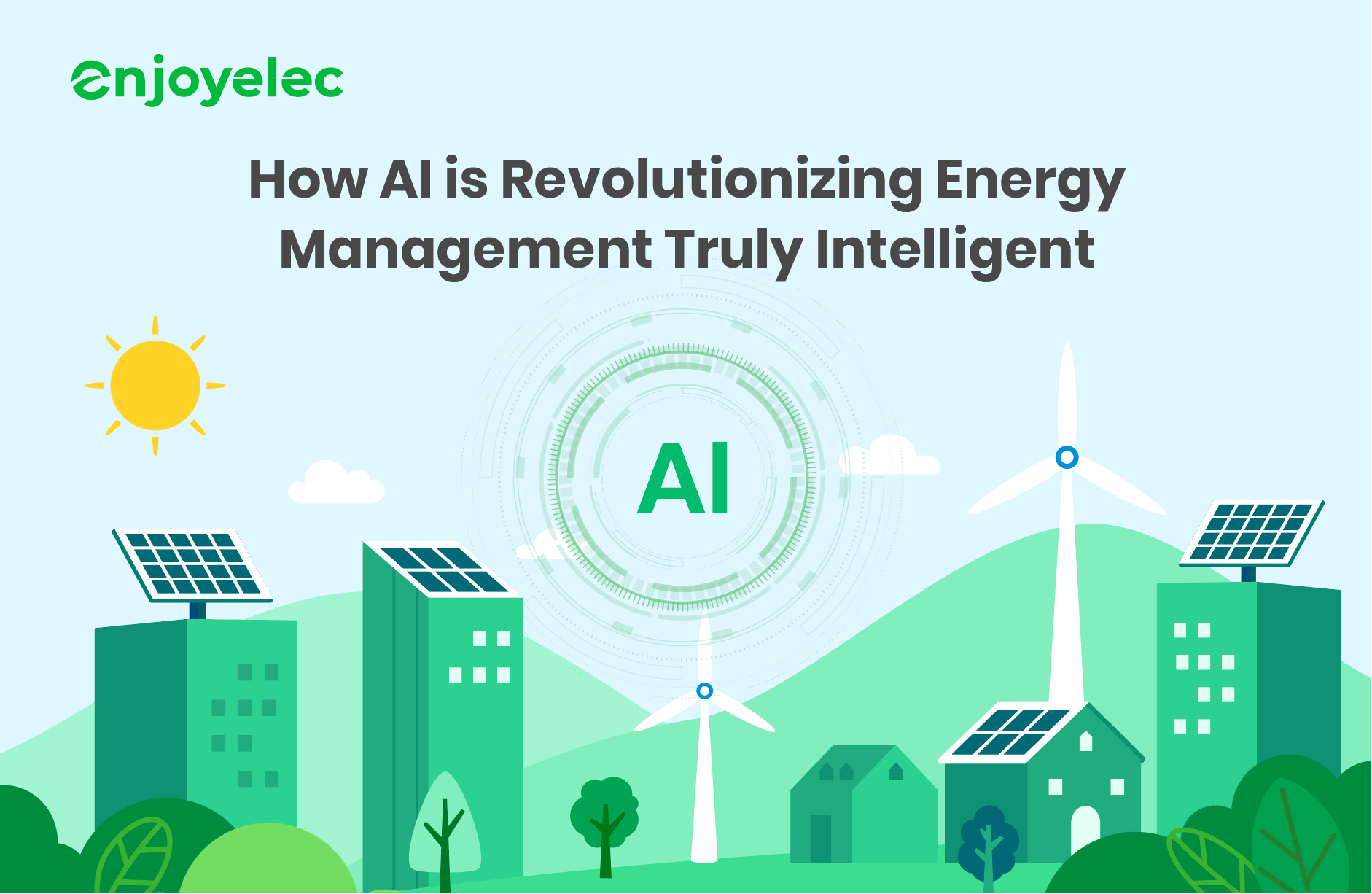
Artificial Intelligence (AI) is transforming energy management by making systems smarter, more adaptive, and cost-efficient. Traditional energy systems rely on static rules or fixed schedules, but AI introduces dynamic decision-making based on real-time data, user behavior, weather forecasts, electricity prices, and grid signals.
In home energy management, AI can automatically optimize when to charge or discharge batteries, run appliances, or sell energy back to the grid. It predicts solar production, aligns consumption with dynamic tariffs, and ensures energy is used when it’s cheapest or most sustainable. This results in lower bills, better use of renewable energy, and reduced grid strain.
Beyond automation, AI enables true personalization and responsiveness. It learns household habits, adapts to changes, and balances energy efficiency with user comfort. As more homes and businesses adopt AI-powered energy systems, we move closer to a flexible, decentralized, and greener energy future.
AI Deployments in Energy Management
Renewable Energy Optimization
As renewable sources like solar and wind become central to the energy mix, AI plays a vital role in ensuring their efficient integration. By analyzing weather forecasts and generation trends, AI can predict the availability of renewables and coordinate energy distribution in real time. This helps stabilize the grid, maximize renewable usage, and maintain supply reliability even with fluctuating generation.
Energy Forecasting
Accurate forecasting is essential for a balanced and efficient energy system. Powered by AI, modern forecasting goes beyond just predicting demand — it also anticipates electricity prices and solar PV generation by analyzing weather patterns, historical data, market signals, and real-time usage. This leads to smarter planning, reduced waste, and optimized energy use for both households and the grid.
Smart Home Demand Response
AI enhances demand response by forecasting peak periods and adjusting energy use in real time. It can automatically control devices like HVAC and lighting based on grid conditions, helping reduce consumption during high-demand hours and easing pressure on the energy system
Smart Grid
AI improves the smart grids with decentralized resource control, matching supply and demand with real-time energy consumption and detection of faults.
Energy Storage Management
AI maximizes the value of energy storage technologies like batteries by correctly predicting when to charge and discharge at a consistent rate.
EV Charging
AI uses predictive analytics to predict that an electric vehicle is going to need more energy at certain times, schedules charging so that such a thing happens at an optimal level, and there will be balancing in terms of load on the grid so that there might not be spiky electricity demand
Energy Market Analytics
It provides future forecasts associated with price volatility linked to the commodity and initiates business trading plans and also depicts decision-making data before the suppliers and buyers involved in this trade.
How enjoyelec’s AI-Driven Optimization Enables Smarter Energy Management
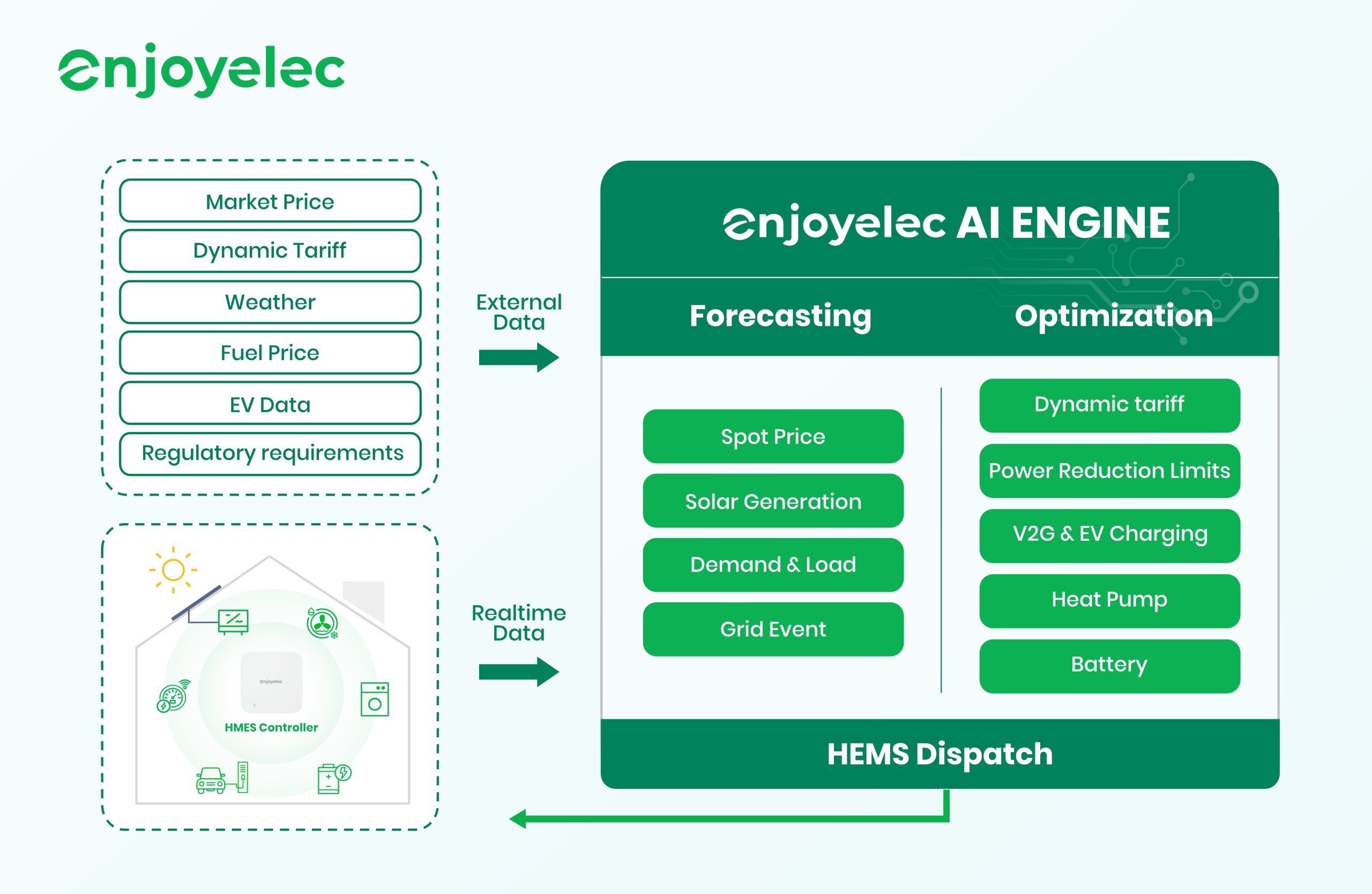
Behind every seamless self‑consumption story is enjoyelec’s AI engine, working quietly to turn data into dollars saved and carbon reduced. By combining cloud‑edge intelligence with real‑time device control, our HEMS delivers four key capabilities:
-
Holistic Data Fusion: We pull in market prices, dynamic tariffs, weather forecasts, EV schedules, fuel costs, and regulatory signals—alongside your home’s live solar output, battery state, heat‑pump usage, and EV charging status. This rich data tapestry gives our AI the full picture it needs to plan ahead.
-
Proactive Forecasting: Instead of simply reacting to incoming generation or price signals, enjoyelec’s algorithms predict spot prices, solar genneration, household load, and even grid events. That means your system can pre‑charge the battery before a price spike or hold back export when tariffs drop.
-
Device‑Level Optimization: From battery charge/discharge and V2G/EV charging to heat‑pump scheduling and peak‑shaving limits, our engine calculates the optimal dispatch for each asset every minute. Dynamic tariff awareness ensures you charge when electricity is cheapest and use or sell when it’s most valuable.
-
Real‑Time HEMS Dispatch: All recommendations are instantly translated into control signals by the enjoyelec HEMS Controller. Whether you lose internet connectivity or face a sudden grid event, local edge logic keeps devices running on the smartest, most cost‑effective settings.
The result is higher self‑consumption, lower bills, smoother grid interaction, and a more sustainable energy future.
The Future of AI in Energy Management
Artificial intelligence is set to play a pivotal role in transforming how energy is managed and optimized across various sectors. By leveraging vast amounts of data and advanced machine learning techniques, AI can improve forecasting accuracy, enhance the operation of energy storage systems, and optimize consumption patterns in both residential and industrial settings. These capabilities enable more efficient use of resources, reduce waste, and support the transition to greener energy solutions, ultimately helping to lower carbon footprints and energy costs.
Looking ahead, the integration of AI with emerging technologies such as the Internet of Things (IoT) and blockchain will further revolutionize energy systems. This convergence will enable smarter grids that can autonomously adapt to changing demands, facilitate peer-to-peer energy trading, and improve overall system resilience. As AI algorithms continue to evolve, they will drive innovation in renewable energy management, demand response, and decentralized energy resources, positioning AI as a cornerstone technology in building a sustainable and intelligent energy future.