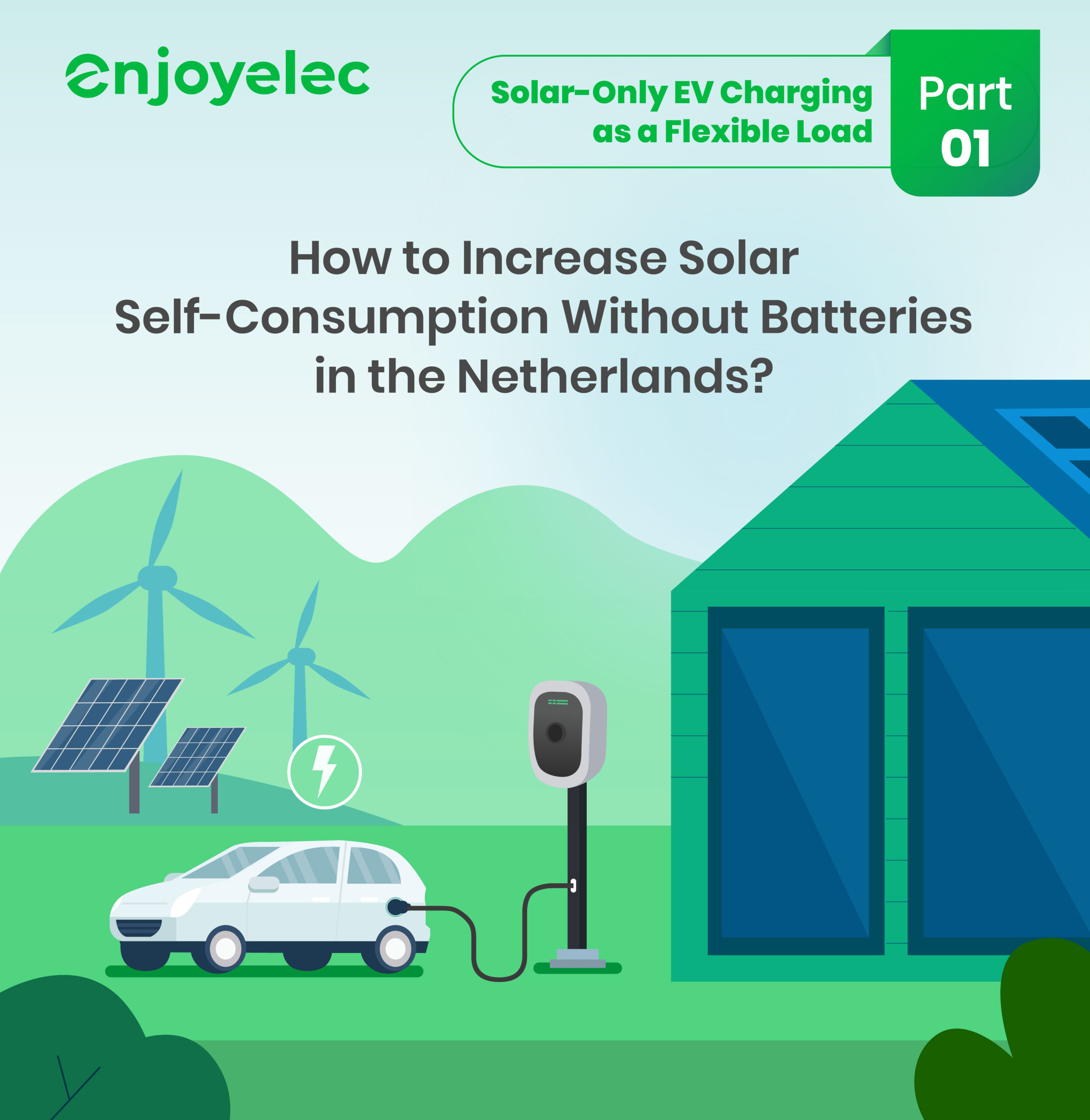
How to Maximize Solar Self-Consumption without Batteries in the Netherlands
The Netherlands has one of the highest residential solar PV penetration rates in Europe. However, with the gradual phase-out of net-metering (Salderingsregeling) and tax exemption from 2027, exporting solar energy to the grid is becoming less attractive due to increasing grid feed-in fees (Terugleverkosten). As a result, maximizing solar self-consumption in the Netherlands is quickly emerging as the most effective way for households to reduce electricity costs and improve energy independence. While solar PV remains a powerful asset for the energy transition, the real challenge today is not generation, but how to use more solar energy directly at home, especially without installing batteries.
What is Solar Self-Consumption?
Solar self-consumption refers to using as much of your solar energy as possible directly in your home, instead of exporting it to the grid.
The higher your self-consumption rate, the less electricity you need to import, resulting in lower energy bills and reduced exposure to price fluctuations.
In markets like the Netherlands, where feed-in incentives are declining, increasing solar self-consumption has become a key strategy for maximizing the value of rooftop PV systems.
Why is it Difficult to Increase Solar Self-Consumption
In practice, solar generation and household consumption rarely align. Solar panels typically produce the most energy during midday, while household demand often peaks in the early morning and evening.
Traditionally, increasing self-consumption required manual intervention—monitoring solar generation and turning on appliances at the right time. This approach is not only inconvenient but also inefficient.
At the same time, rising solar penetration in the Netherlands is putting increasing pressure on the grid, leading to congestion and limitations on feed-in capacity.
This makes it even more important to use solar energy locally instead of exporting it.
Is a Battery Necessary to Maximize Solar Self-Consumption?
Batteries are often considered a solution for increasing solar self-consumption. However, they are not always the most practical option.
On the one hand, residential batteries require a significant upfront investment, which may not be economically viable for many households. On the other hand, simply adding storage capacity does not automatically lead to better energy optimization. When batteries, EVs, and heat pumps operate independently, available solar energy may still be underutilized.
In addition, with dynamic electricity tariffs fluctuating in 15-minute intervals, managing energy efficiently becomes even more complex.
Even with a fully charged battery, excess solar energy may still be exported at low prices while flexible loads remain unused.
This raises a key question: how to increase solar self-consumption without batteries?
How to Use Excess Solar Energy at Home Without Batteries
The answer lies in smart coordination.
Instead of relying solely on storage, Dutch households can increase solar self-consumption by 3 ways to align energy usage with enjoyelec.
enjoyelec Home Energy Management System (HEMS) enables this by automatically controlling household devices based on real-time solar production, consumption, and grid signals.
1. Solar-Only EV Charging as a Flexible Load
The Netherlands has one of the highest electric vehicles (EV) adoption rates globally. There is a direct need from households to flexibly charge EVs with more solar to maximize solar self-consumption. enjoyelec Solar-Only Charging is built for this condition.
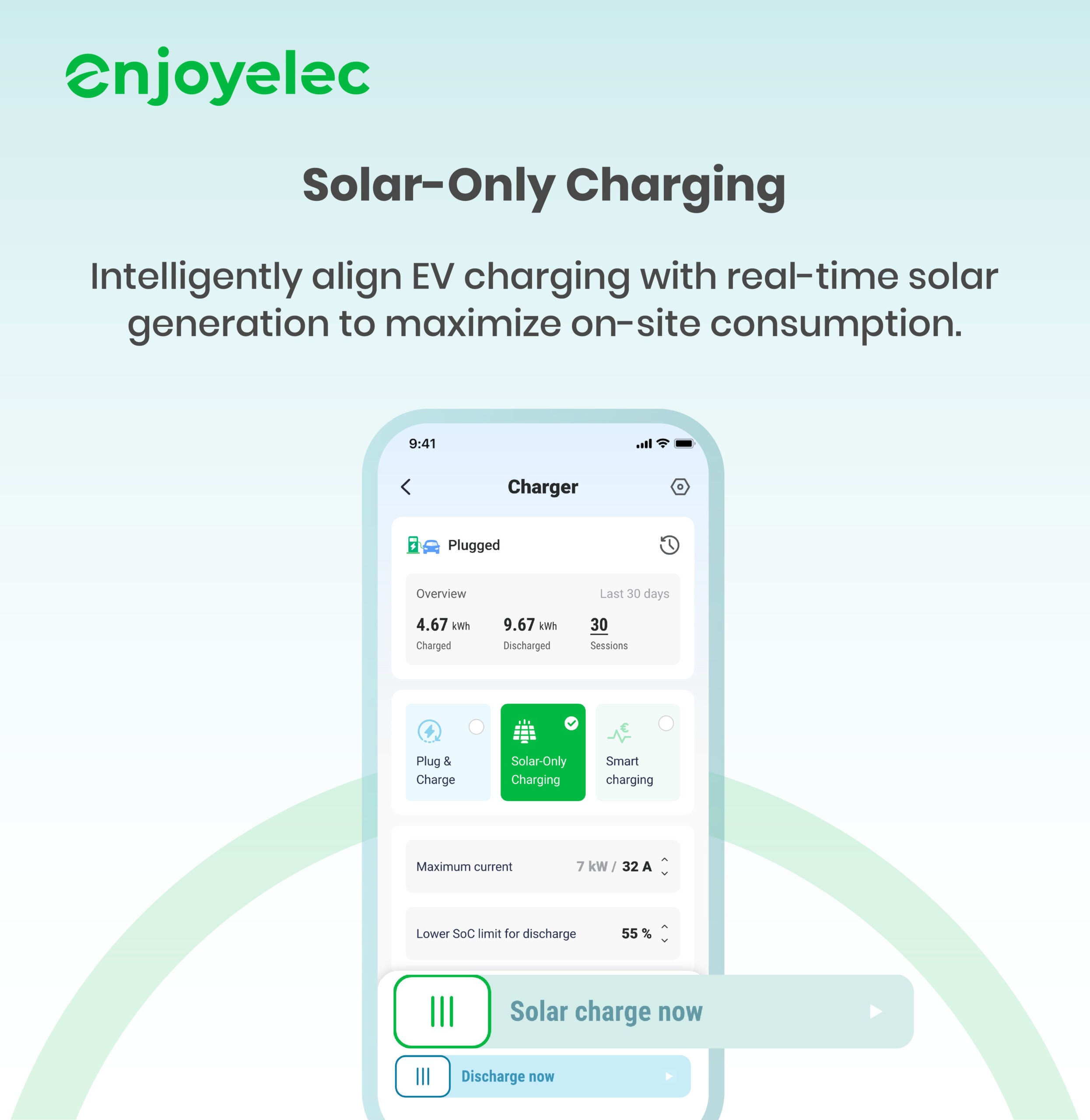
How to charge EV with Excess Solar Power? Turn on Solar-Only Charging Mode in the enjoyelec App and plug in your EV. When all home loads are met, and there is solar surplus detected, instead of exporting to the grid, HEMS will automatically activate EV charging to consume that energy on-site.
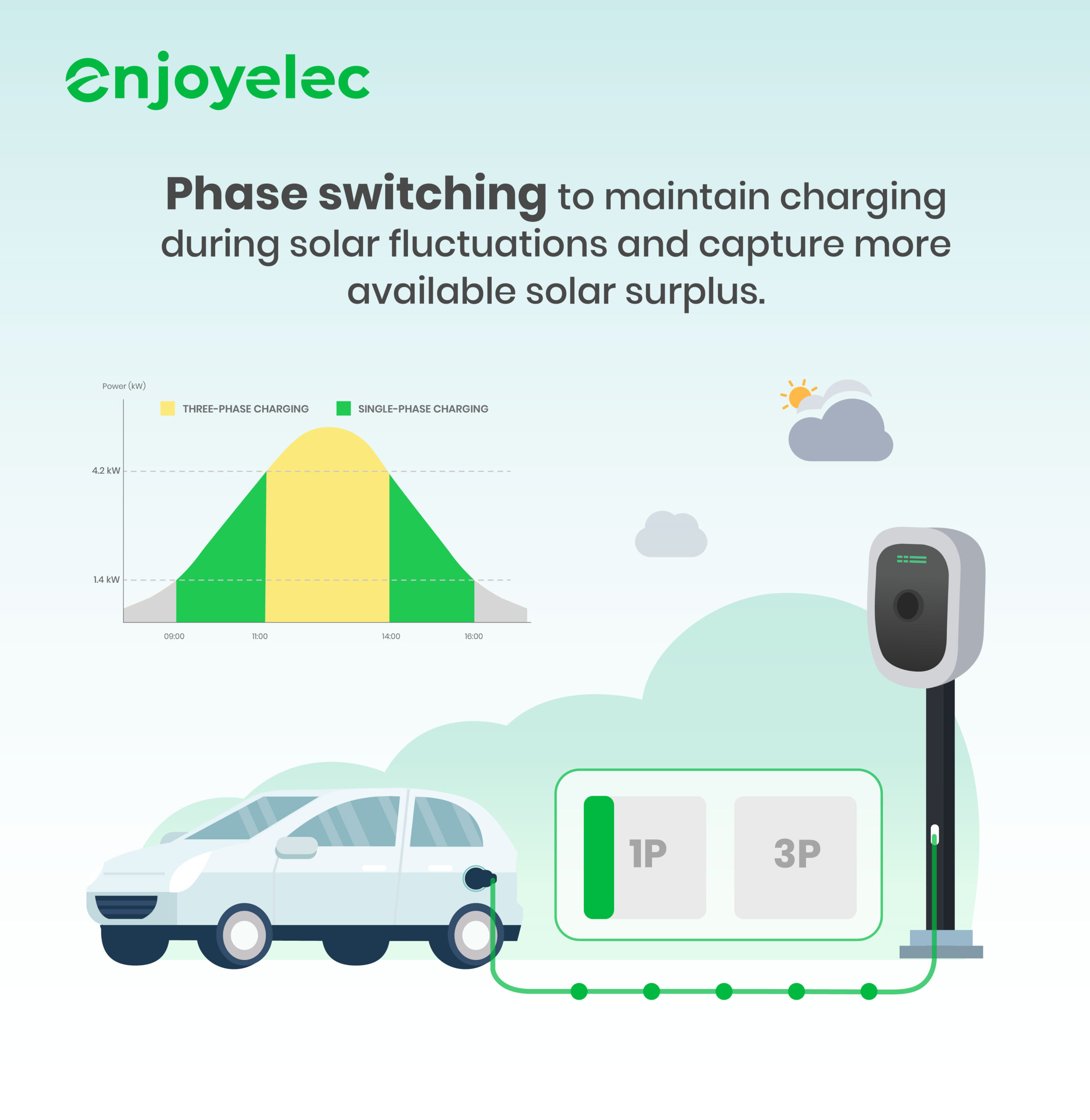
What’s more? The solar generation fluctuates, so does the solar surplus. And enjoyelec HEMS can capture more available solar energy for you through automated phase switching.
When solar exports are lower than 4.2 kW and are not enough to activate three-phase charging, the system will automatically switch to single-phase charging, of which the threshold is usually 1.4 kW.
It means that even during early day, late afternoon, or in winter… whenever sunshine fades, your EV can maintain charging, and the solar surplus can be used as much as possible.
No manual control is required. Once connected and configured, the system prioritizes local consumption whenever conditions allow. This is one of the most effective ways to increase solar self-consumption without batteries.
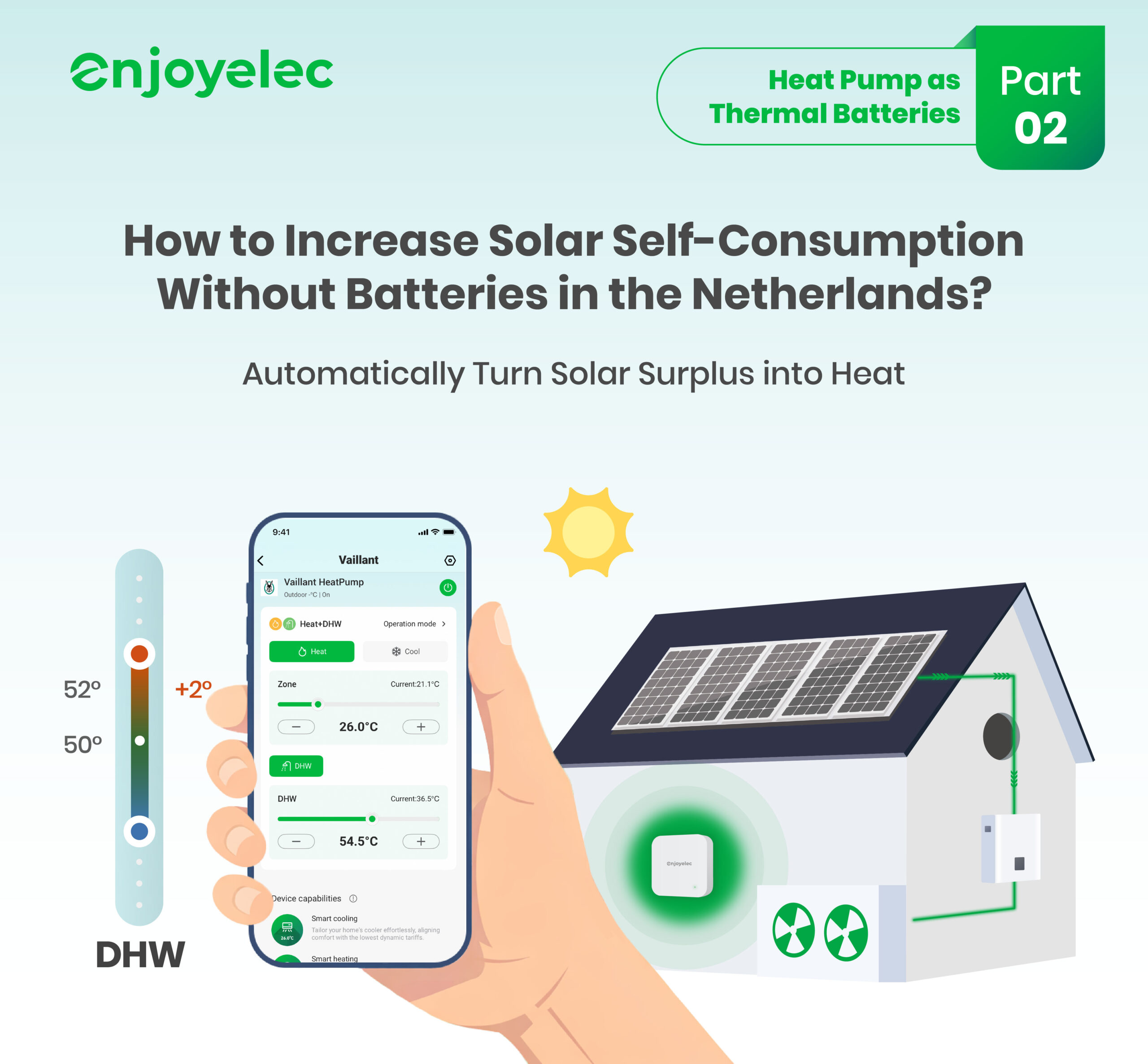
2. Heat Pump as Thermal Batteries
Heat pumps are generally heaviest loads in homes. According to an EU report, the main use of energy by EU households was for heating.
Besides, household needs it at a regular time periods, usually falls from late afternoon to early morning, when people are at home. It also, however, means that they usually miss the solar generation, and are exposed to high price periods during the day. The report shows that by shifting heating demand to low-price periods or using more surplus solar power, some households can cut electricity bills by up to 40%. enjoyelec HEMS is here to help. Even without a battery, your heat pump can act as a thermal battery and store solar energy.
How to Use Solar Power for Heat Pump Preheating? What you need to do is to connect your heat pump in the enjoyelec App, and then our embedded AI will monitor and automatically directs solar surplus to your heat pump for preheating, raising water temperature and storing heat in your tank or building mass. Later, when the sun fades, that stored heat can partially or wholly cover your heating demand, reducing reliance on expensive grid power.
The heat pump solar integration feature can increase PV self-consumption, reduce energy costs and greater energy resilience, without additional battery investment.
If you can ware that not all batteries are electrical; some are already in your home, waiting to be optimized. Using a heat pump as a thermal storage system is a practical alternative to electrical batteries.
3. Smart Plug & Relay for Solar Surplus Control
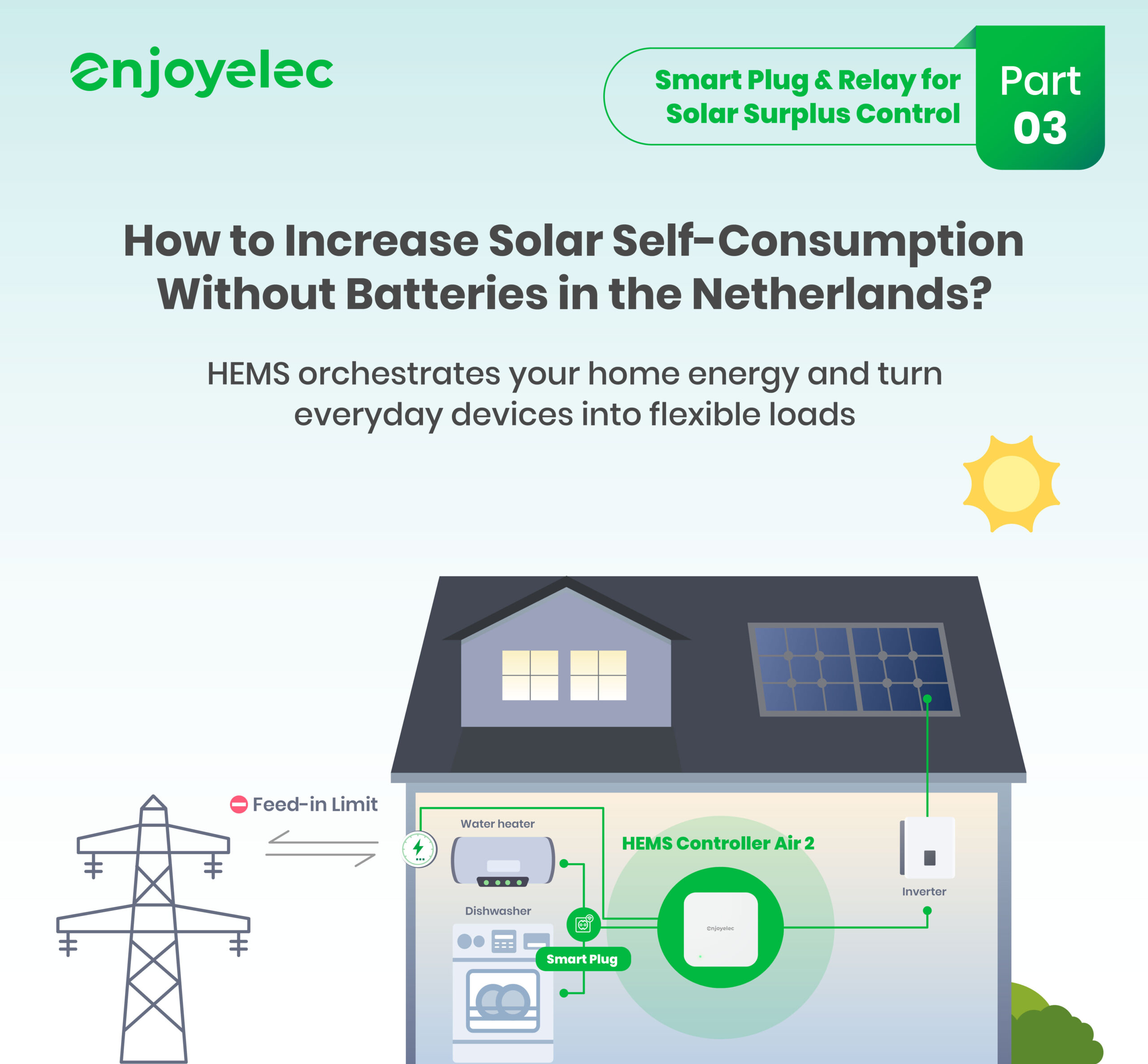
Many household appliances in Dutch homes, like heaters, water boilers, and dish washers are still not responsive to solar generation, leaving valuable self-consumption potentials unused.
These standalone or non-connected devices often operate independently, without responding to real-time solar availability. Users used to rely on manual control or retrofit with extra heavy budget. Now, enjoyelec HEMS provides the third plan with cost-efficiency, upgrading your devices with smart devices such as smart plugs and relays then HEMS can integrate these previously passive assets into your energy ecosystem, and automatically maximize solar self-consumption without battery.
How Smart Plugs and Relays Increase Solar Self-Consumption? No need of additional hardware upgrades or complex integration, just connect smart plugs or relays via the enjoyelec App. Smart plugs and relays turn conventional appliances into flexible loads that can respond to solar generation in real time.
Once the feed-in limit strategy is enabled in the App, HEMS detects available solar surplus and automatically activates connected devices. The embedded AI can also anticipate household demand and generation, prioritizing loads based on predefined rules, like power rating, and enabling more coordinated and efficient energy use.
Users can also schedule preferred operating windows, combining automated control with flexibility. Built-in safety mechanisms further ensure reliable operation, triggering alerts or automatic shut-off to prevent overload risks in dynamic loads scenarios.
Instead of running independently, these flexible devices begin to align with solar availability, quietly shifting consumption to the moments when energy is most abundant. 🌞🏠
When more devices can respond to solar generation, the home stops consuming energy passively and starts using it intelligently.
Maximizing solar self-consumption is not only about adding more hardware, but also about using existing assets more intelligently.
In the Netherlands, where high solar penetration meets evolving policies and grid constraints, smart energy coordination is becoming essential.
By aligning EVs, heat pumps, and household appliances with solar generation, households can significantly increase self-consumption, even without installing batteries.
This shift marks a transition from passive energy use to active energy management, which is an important step toward a more flexible and resilient energy system
And that’s what the future of energy looks like.
Discover how enjoyelec HEMS can help you get more from your solar energy: HEMS Solution – enjoyelec