
What is Energy Communities: From Policy Concept to Scalable Energy Systems in Europe
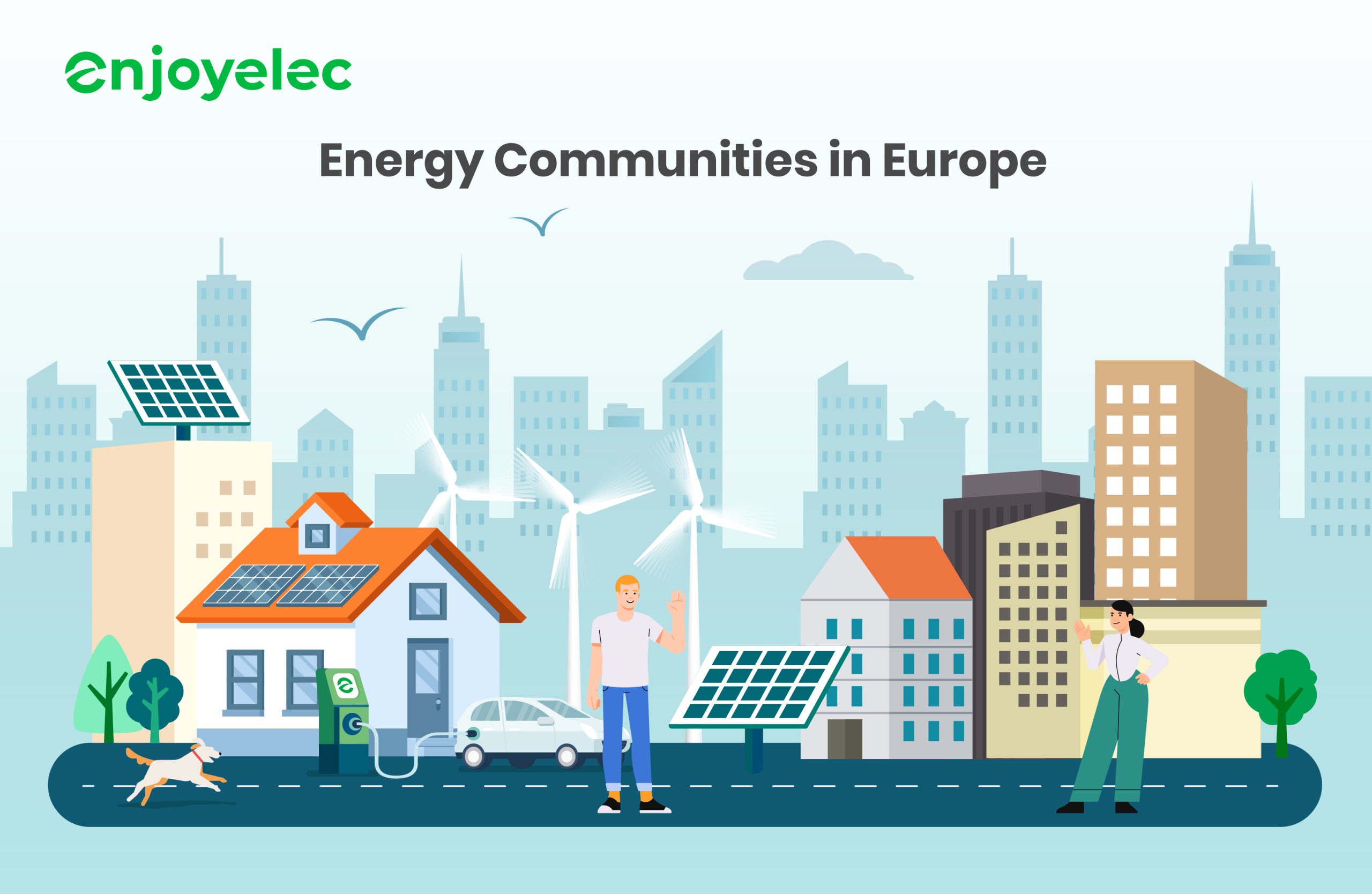
What are Energy Communities in Europe?
Unlike traditional energy market actors, their primary objective is not profit maximization, but to deliver environmental, economic, and social value to their members, mainly including lower energy costs, increased renewable energy use, and greater energy independence.
At the same time, energy communities can act as single market participants, allowing them to access electricity markets on a level playing field with other actors.
How Energy Communities Work in Practice
1.Local Generation and Consumption
Members generate electricity through distributed assets such as rooftop solar or community-owned wind projects. This energy is first consumed locally by participating households or businesses.
2.Energy Sharing within the Community
When local generation exceeds individual demand, the surplus can be shared across other members within the community.
Depending on national regulations, this sharing can be implemented through:
Virtual allocation: Surplus energy is fed into the grid, but is virtually assigned to other community members through metering and billing systems.
Supplier-based models: Energy sharing and settlement are managed by an electricity supplier, which allocates consumption and applies differentiated billing across participants.
Local grid mechanisms where permitted: In some cases, energy can be physically shared within a local network, such as a building or industrial site, without relying entirely on the public grid.
3.Grid Interaction and Settlement
Remaining surplus can be exported to the grid, while any deficit covered through grid imports.
In this process, a settlement mechanism is required to:
Allocate energy flows between members
Apply tariffs, network charges, and taxes
Distribute economic benefits across participants
In essence, an energy community is not just about producing energy, it’s about how energy is allocated prices, and managed across multiple participants.
Why Progress Remains Slow in Practice
Although EU-level frameworks provide high-level definitions, national implementation often lacks clarity. Many participants face uncertainty around eligibility, governance structures, and operational requirements.
In addition, key rules that directly affect participants are still evolving.
Questions such as how energy is shared, how tariffs and taxes are applied, and how benefits are distributed are not always clearly defined or consistently implemented across markets.
Yet, even when these initial barriers are overcome, technical challenges emerge.
Once established, energy communities must operate as dynamic systems, balancing generation, consumption, and market conditions in real time. This introduces a new layer of technical complexity that goes beyond policy and infrastructure.
As a result, many energy communities struggle not only with how to operate, but even with how to get started.
What Makes Energy Communities Work in Practice
-
Local generation with real-time demand
-
Energy flows across multiple participants
-
Electricity prices across different time periods
-
Grid constraints and operational limits
This is not simply a matter of infrastructure, but of system-level energy management capability.
In practice, energy communities require an integrated approach that combines monitoring, analysis, control, and optimization across distributed assets and participants.
This includes the ability to:
-
Monitor real-time generation, consumption, and energy flows across the community.
-
Analyze data and price signals to understand system conditions and identify optimization opportunities.
-
Control distributed assets—such as EV chargers, heat pumps, and storage systems—in a coordinated way.
-
Optimize operations continuously, aligning energy use with availability, prices, and grid constraints .
These functions are not isolated. They form a continuous operational loop that enables energy communities to respond dynamically to changing conditions.
From Policy to Scalable Reality
At the same time, more advanced energy management capabilities are needed to ensure that these systems can operate efficiently under real-world conditions.Together, these developments will determine not only how quickly energy communities can scale, but also how much value they can ultimately deliver.As these foundations continue to evolve, energy communities remain one of the most promising pathways toward a more decentralized, efficient, and sustainable energy system in Europe.