Why interoperability is becoming critical for multi-brand energy systems in Europe
Europe’s electrification is entering a new phase.
The challenge is no longer simply deploying more solar PV, battery storage, EV chargers, or heat pumps. Increasingly, the real challenge is making these technologies operate as one coordinated energy system.
As electrification accelerates across Europe, seamless integration between devices, protocols, and energy platforms is becoming essential for both residential and commercial energy systems.
Europe’s Electrification Boom Is Increasing System Complexity
Electrification growth continues to accelerate across multiple sectors.In the first quarter of 2026, battery-electric vehicles accounted for 19.4% of all new car registrations in the EU, up from 15.2% a year earlier. At the same time, Europe’s battery storage market added 27.1 GWh of new capacity in 2025, marking another record year for deployment.The rapid expansion of solar PV, battery storage systems (BESS), EV charging infrastructure, heat pumps, and smart meters is fundamentally reshaping how electricity is generated, consumed, and managed.
In most real-world projects, energy assets come from different manufacturers and rely on different communication standards. A typical installation may combine PV inverters from one vendor, battery systems from another, EV chargers from a third, and heat pumps operating with completely separate control logic.
The problem is no longer hardware performance.
It is system coordination.
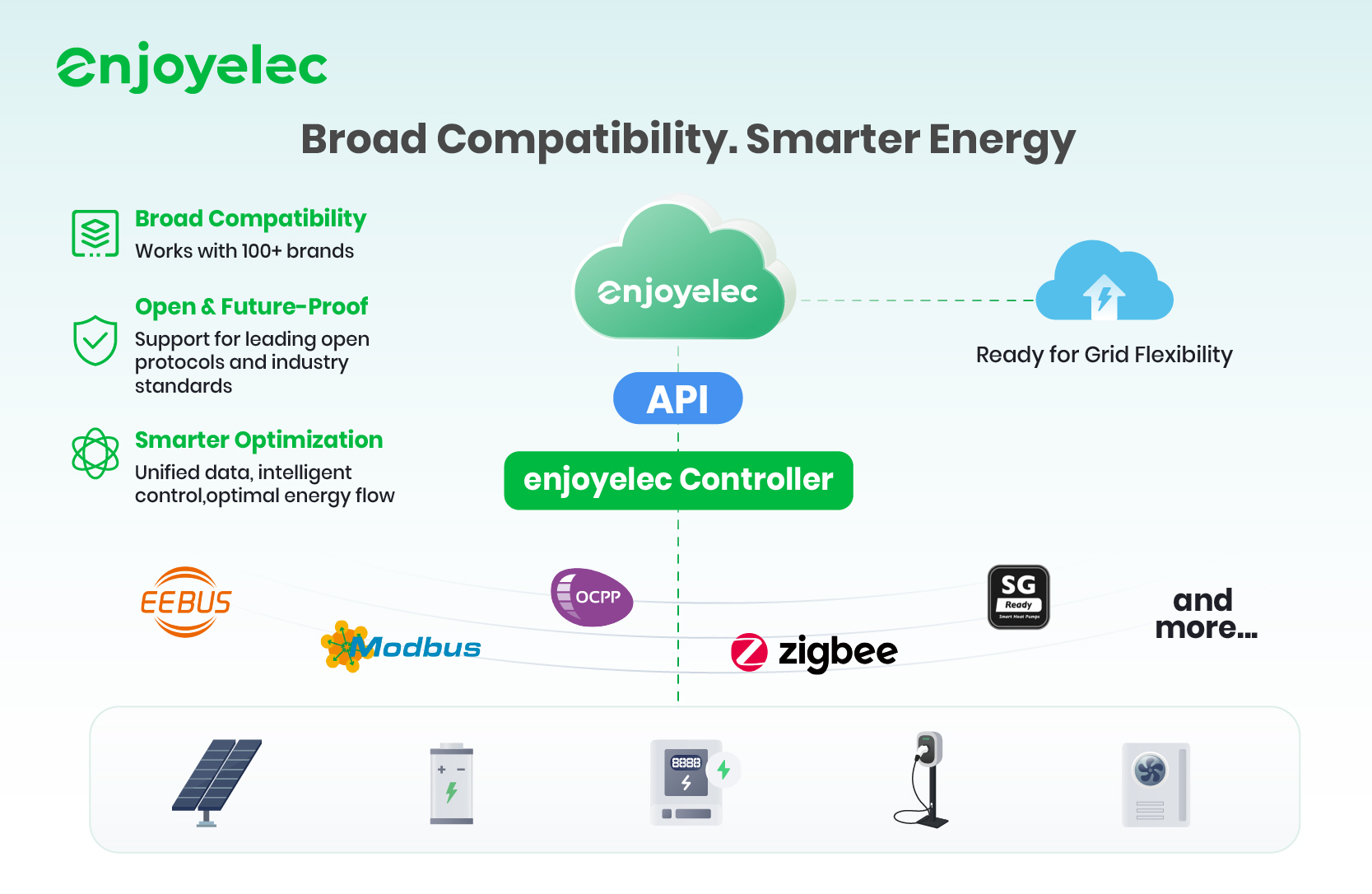
Today’s distributed energy systems typically rely on a mix of communication standards, including:
-
Modbus for industrial device communication
-
OCPP for EV charging infrastructure
-
EEBUS for smart energy device integration
-
OpenADR for grid-to-device demand response communication
In residential sector-coupling scenarios, standards such as SG Ready are also increasingly relevant for integrating heat pumps into coordinated energy management strategies.
Without effective coordination across protocols and devices, system integration becomes slower and more complex, increasing commissioning effort and limiting future scalability. More importantly, isolated assets cannot respond collectively to price signals, grid conditions, or flexibility programs.
Why Coordination Matters More Than Ever
This challenge is becoming increasingly urgent as Europe’s power grid faces mounting pressure from electrification and renewable energy expansion.
The Cost of Isolated Energy Systems
For asset owners and operators, poor integration translates directly into lost value.
The Shift Toward Multi-Protocol Energy Management
The industry is gradually moving toward a more scalable approach: multi-protocol integration combined with cloud-edge energy coordination.
How enjoyelec Supports Interoperable Energy Systems
At enjoyelec, interoperability is a core design principle across both our HEMS and C&I EMS platforms.
Our Controllers support major industry communication standards including Modbus RTU/TCP, EEBUS, OCPP, Zigbee, and OpenADR, enabling integration across PV inverters, battery systems, EV chargers, heat pumps, and smart meters.
The platform combines:
● Wired connectivity for stable system communication
● Wireless connectivity for retrofit-friendly onboarding
● Cloud-to-cloud APIs for scalable third-party integration
This architecture helps asset owners avoid vendor lock-in while supporting future system expansion.
Our commitment to open interoperability also extends to industry collaboration. enjoyelec is participating in the development of open-source EEBUS implementations as part of broader European initiatives focused on interoperable Home Energy Management Systems.
What This Means in Practice
For installers, asset operators, and energy service providers, interoperable energy management creates measurable operational advantages:
-
Lower integration complexity across multi-brand environments
-
Greater hardware flexibility without ecosystem lock-in
-
Improved energy optimization through coordinated control
-
Better access to flexibility markets and demand response services
-
Future-ready system architectures that support long-term expansion
As Europe’s energy systems become increasingly distributed and dynamic, coordinated device integration is becoming a foundational capability rather than a technical preference.
The Next Phase of Europe’s Energy Transition Will Be Defined by Coordination
Europe’s energy transition has passed the point where simply installing more devices guarantees better outcomes.The next phase will be defined by how effectively distributed energy assets can coordinate across brands, protocols, and market signals.The hardware is already in place.
Interoperability is no longer optional.
It is becoming a foundational layer of scalable energy management in Europe.
👉 Learn more about enjoyelec energy management solutions: enjoyelec -Smart Energy Management Solutions
👉 Or contact us for a quick asset compatibility check: info@enjoyelec.net